

Table of contents
Water is life – but please boil it!
Here's how to prepare Ushnodaka
When and how much? Here's how to drink it correctly.
Pimp your Ushnodaka – Variations with spices
My tip for everyday life
It sounds almost too simple to be true: boil water, drink it, feel good. And yet, in Ayurveda, this is a powerful ritual with astonishing effects. Ushnodaka – boiled water – is a simple but powerful element of Ayurvedic health teachings. In Ayurveda, it is considered purifying, metabolism-boosting, and immune-strengthening. And the best part: you don't need a blender or superfoods – just a pot, some time, and the desire to do something good for yourself.
Water is life – but please boil it: The Ayurvedic view on boiled water
Our bodies are largely made up of water. It nourishes our cells, transports nutrients, and keeps us supple – inside and out. But Ayurveda says: not all water is created equal. Only through boiling is it transformed: it becomes lighter, warmer, and energetically charged.
When you simmer water for 10–15 minutes, its structure and effects change. It acquires specific properties that are used therapeutically in Ayurveda:
- It becomes "laghu" – light, and therefore easier to digest.
- It has a "ushna" – heating effect, which strengthens the digestive fire (Agni).
- It is “deepana” – appetite-stimulating, and prepares the body for food intake.
- It has a "pachana" effect – promoting digestion and burning ama, thus helping to gently eliminate metabolic waste products.
- It exhibits a “lekhana” effect, which means that it has a figurative scraping effect – it cleanses the tissues and frees the body from internal ballast.
Furthermore, boiled water has a diuretic effect, supports the lymphatic system, and balances Kapha and Vata imbalances in particular. It can be helpful for disorders of the Meda-Dhatus (fatty tissue), such as in cases of obesity, and is traditionally used for Amavata (inflammatory disorders of the musculoskeletal system), coughs, fever, and bronchial asthma.
This simple practice can therefore do far more than just quench thirst – it is a silent helper for cleansing, regulation and regeneration.
I've been drinking Ushnodaka every morning for over twenty years. Sometimes plain, sometimes with ginger or fennel. It's my little ritual before the day begins – and my stomach notices the difference. That's why I want to show you how you can easily integrate it into your daily routine.
Here's how to prepare Ushnodaka – it couldn't be simpler.
You need:
1 liter of tap water
Preparation:
Simmer water in a pot for 10-15 minutes without a lid. Pour into a thermos and drink in small sips throughout the day – preferably warm.
Dosha adjustment through boiling:
Vata : reduce to approximately 875 ml
Pitta : reduce to approximately 750 ml
Kapha : reduce to approximately 500 ml
The longer the water boils, the more intense its cleansing effect. For Vata, it should be gentle and calming; for Pitta, mild – with a moderate boiling time so that it doesn't become too hot; and for Kapha, truly activating and metabolism-stimulating.
When and how much? This is how you drink
properly boiled water
The effects of boiled water are best when you drink it correctly. This means: warm, throughout the day, and in small sips. This allows your body to absorb it optimally and fully utilize its cleansing properties.
General tips:
- Start the morning on an empty stomach: A glass of warm boiled water on an empty stomach stimulates digestion and prepares the body for the day.
- Drink throughout the day: not all at once, but in sips – this keeps the digestive fire stable.
- Enjoy it warm: not boiling hot, but not lukewarm either. The warmth supports Agni (digestive fire) and is pleasant for the body.
- Use a thermos: Boiled water will keep in it for about 12 hours. Prepare it in the morning and take it with you.
For Vata types:
Vata needs regularity and warmth. Drink your Ushnodaka at regular intervals throughout the day – this calms nervous Vata and promotes grounding. Make sure it's pleasantly warm, but not too hot. A moderate amount (reduced to about 875 ml) is ideal for gently balancing Vata without overtaxing it.
For Pitta types:
Pitta is naturally hot – therefore, the water should not be boiled for too long (reduce it to approximately 750 ml). Drink it warm, but not hot, to avoid further inflaming the inner fire. Ushnodaka is particularly helpful for Pitta in the late morning and early afternoon. Avoid drinking large quantities late in the evening, as this can agitate Pitta.
For Kapha types:
Kapha types particularly benefit from the activating effect of boiled water. Drink it as hot as possible, especially in the morning – this gets a sluggish metabolism going. The longer the water is boiled (reduced to approximately 500 ml), the stronger the cleansing and purging effect. Unlike Vata and Pitta types, however, Kapha types shouldn't drink too much – quality over quantity.

Pimp your Ushnodaka – Variations with spices
Boiled water is effective in its pure form – but with selected spices, you can specifically enhance its effects and tailor it to your constitution or current ailments. Ayurveda uses spices not only for flavoring, but also as therapeutic aids with specific properties.
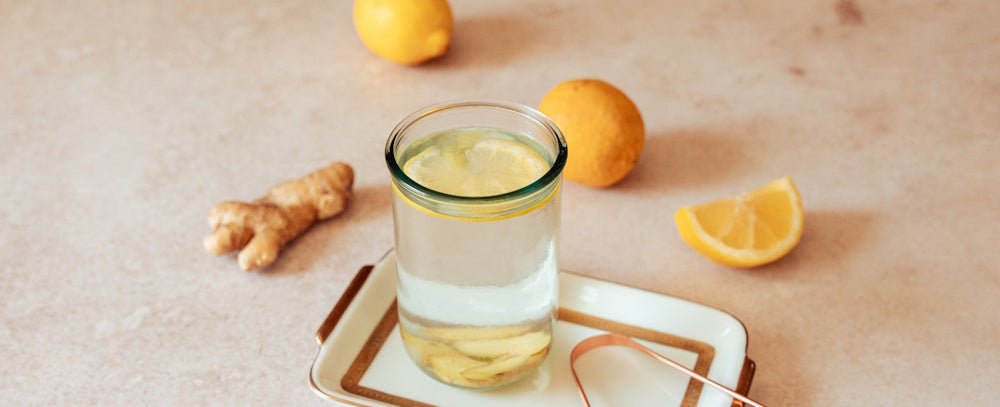
Ginger has a pungent flavor and a warming effect – ideal for Kapha and Vata doshas. It stimulates the digestive fire (Agni), helps to burn Ama (metabolic waste), and can be beneficial for bloating, respiratory ailments, joint pain, and nausea. Ginger's cleansing effect is particularly pronounced when added to boiled water – it clears the respiratory tract (Pranavaha-Srotas) and is therefore also suitable for preventative use during cold and flu season.
Fennel seeds have a calming, antispasmodic, and balancing effect. Although they have a cooling quality, they stimulate digestion and help to eliminate ama – metabolic waste products. In Ayurveda, they are traditionally used for bloating, abdominal pain, hyperacidity, nausea, as well as liver and spleen disorders. Fennel balances both Vata and Pitta (but does not disturb Kapha) and is ideal for Vata-Pitta combinations.
Turmeric is a true healing spice – not only in the kitchen, but also in the Ayurvedic home medicine cabinet. It balances all three doshas, but has a particularly harmonizing effect on Pitta-Kapha mixed types. Turmeric has a pungent taste, purifies the blood, promotes clear, radiant skin, and possesses strong anti-inflammatory, antiseptic, and pain-relieving properties. You can add both fresh and dried turmeric to your boiled water – depending on your taste and tolerance.
You can boil the spices directly with the water or add them after cooking and let them steep briefly. Pay attention to your current constitution and your intuition – Ayurveda is always an invitation to self-observation.
My tip for everyday life – how to make it a routine
For your Ushnodaka to become more than just a good intention, and truly a part of your daily life, you need one thing above all: ease. Ayurveda thrives on regularity – not perfectionism.
Here's how to get started:
- Start small. Begin with just water or a spice that appeals to you – for example, ginger in the morning or fennel in the afternoon.
- Prepare your water immediately after getting up. While you're getting ready, it can simmer or cool down.
- Use a nice thermos. This will keep your water warm and you can drink it throughout the day.
- Link it to a ritual. For example: "First my water, then my calendar" – that helps you not to forget it.
-
Stay curious. Feel what's good for you and adjust your mix to your daily condition or the season.
My personal favorite in autumn: warm water with fresh ginger, fennel seeds, and a pinch of turmeric – a mildly spicy, slightly sweet water that's pleasant to drink – especially in the morning or at the first signs of a cold. This combination balances all three doshas, with a particular focus on Pitta-Vata balance, which is just what's needed in autumn.
Curious what your individual constitution reveals about you?
Click here for a free initial consultation or to go directly to the Kickstart .